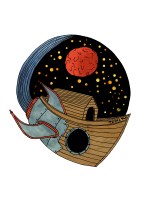
They’re both trying not to breathe in the smog.
It’s hard in a city like Primoris, where the natural sky is a long-forgotten thing. There’s only the smog now; the ever-growing smog that crawls above the city like some ancient, vengeful creature, wrapping its jaws around their throats until they choke on ‘innovation’. The smog has infested every part of the city, Noah realised that quick enough, and it made his stomach turn. How beautiful the city could have been, with its brick buildings and its stained-glass windows and its cobbled streets, if it weren’t for that foul thing.
He can hear Arthur laugh at him. Even though they haven’t known each other for very long, Arthur has the strange ability to figure out what he’s thinking and why he’s thinking it. Noah wishes, sometimes, that he could understand Arthur’s mind in a similar way. Only sometimes. He wouldn’t want to spend too long in such a prancing place, lest he develop Arthur’s tendency for flights of fancy.
Yet he still turns his back to the smog, joining Arthur on the steps of the Sophisticate. It’s the only building in the city that’s made of marble, but whatever shine the bricks once had has been worn down by decades of daily cleaning. Even without its shine, though, Noah can’t deny that it still draws the eye; a brilliant, pure white building towering over the soot-covered factories and tenement housing that surround it, with a large, stained-glass window depicting the Capax Infiniti constellation.
Arthur grabs Noah by the crook of his elbow and, with an over-exaggerated flourish of his hand, tips his hat towards the Sophisticate’s doors. “You’ve never been inside, have you?” He asks. “It’s quite the place. The cradle of Primoris, they call it. And Primoris is, of course, the cradle of civilisation.” He returns the hat to his head, fingers drumming against its brim for a moment. “The birthplace of invention, too. Anyone who’s done anything useful has been inside.”
“Quite the place, indeed,” Noah hums. They both know he doesn’t need the history lesson – he’s a scholar, after all – but Arthur’s not fond of silence. “I suppose you’ve been inside a lot, then.”
“A handful of times, yes,” Arthur says. He tries to hide his almost smug tone behind a polite smile, but Noah knows his type too well. “Oh, come now,” his smile turns into a slight frown. “I’m trying to be humble.”
“It’s not working. Did you read the newspaper this morning?”
“Heavens, you and your newspapers,” Arthur releases his elbow. “I didn’t, but I’ve heard about it. The airship factory?”
Noah nods. “It said the Sophisticate is subsidising the construction of a second one.”
“In return for a percentage of the profits, no doubt,” Arthur says, glancing over his shoulder; the Factory District, as people have started to call it, is in that direction. It’s all soot and flue-gas stacks. “It’s nothing they haven’t done before,” Arthur continues, “so it doesn’t surprise me. They’ll start exporting the airships in the next year or so, I think. That’s where the proper money comes from.”
“I started to wonder where they were going to build it,” Noah admits, “so I did some investigating. They’re demolishing the nearby tenements.”
“Heavens, are they?” Arthur sighs. He’s still for a moment, folding his arms across his chest. “They own the land, so… really, they’re allowed to do as they please with the tenements. That’s the price Primoris pays for innovation, Noah. It’s a thing that demands sacrifice.”
“I was wondering–”
“–There’s nothing I can do, Noah,” Arthur turns to face him. “I’m respected, yes, but only in my capacity as an inventor. I have no influence over the Sophisticate.”
“The last thing Primoris needs is another factory,” Noah’s voice sharpens as he speaks. They’ve had this argument before. “You know that. Couldn’t you just say–”
“–Noah,” Arthur cuts him off again, stepping towards him. He uncrosses his arms as he does so, fixing Noah in place with a harsh gaze. “There is nothing I can do. I am neither a Sophist nor a businessman. And I have no interest in inciting civil unrest.”
Noah sighs, turning away from him and walking down the steps of the Sophisticate. He knows that what Arthur says is true, of course he does. Everyone is powerless in this situation. Primoris is the cradle of civilisation, and civilisation requires innovation. He simply wishes the cost wasn’t so great, that they didn’t have to choose between the present and the future.
“You’re fighting a losing battle,” Arthur says, returning to Noah’s side. He leans against one of the large columns; made of marble, as every part of the Sophisticate is. “Primoris is a country that has long since accepted the necessity of sacrifice.”
Noah is silent for a moment, looking up at the sky. “I don’t want you to incite civil unrest.” The smog crawls above the city, writhing. “But someone will have to say something eventually.”
“Now is hardly the right time, Noah.”
Noah turns his head, looking at Arthur over his shoulder. When he speaks, it is almost accusatory. “When is the right time?”
Arthur can’t answer him. He meets Noah’s eyes for only a second before looking away again, staring off into the distance, towards the Factory District. He’s frowning. It’s a question that doesn’t have an answer, that may never have an answer, but it needs to be asked. If not by them, then by whom?
He hears Arthur sigh again. It’s a drawn out, troubled sound. “I don’t know,” he says, with a quiet hesitancy to his voice.
He joins Noah properly this time, so they’re standing shoulder-to-shoulder with their backs turned to the Sophisticate. They stand in silence for a while, watching the comings and goings of the city; the merchants dragging their wares behind them, the carriages rattling over the cobbles, the factor workers wandering the streets with their blackened hands and torn attire.
Noah looks up. The smog crawls above the city. “We should go,” he says. “The paper said the rain’s going to be more acidic than normal today.”
“It’s starting to go that way.” Arthur steps out onto the cobbled street. “It’s not too unusual for spring, though.”
“There was a fire a few days ago.” Noah follows after him. “Inside the coal reserves for the steel factory. It burnt through about half a ton, apparently.”
Arthur frowns again. “That explains it, then.”
Arthur doesn’t say anything else, so Noah doesn’t either. He doesn’t know what he could say. Arthur’s hardly forthcoming when he’s troubled, and Noah reluctantly acknowledges that his mind is a thing to be feared; if he decided he’s going to make something happen, it’s going to happen. He needs to put his faith in Arthur, at least for the time being.
They cross the square and stand at a street corner, beneath an unlit lamp, with the Sophisticate towering over them. Arthur leans against the wrought iron railing, resting his chin in his palm, and his expression is far too pensive for Noah’s liking. He doesn’t mention it, but he makes sure to archive it in the back of his mind, as he does with most things concerning Arthur.
They’re back to observing again, not that Noah minds too much. He leans into the space next to Arthur, mimicking his movements, and his eyes land on a solitary worker walking in front of the Sophisticate; even from this distance, he can see how her hands and clothes are blackened from coal dust, how the shawl wrapped around her shoulders is threadbare and singed. She’s swaying slightly, struggling to keep her balance as she stumbles across the cobbles, and every few steps she pauses to cough into her elbow.
Noah pushes away from the railing, but Arthur grabs his wrist. “It’s pointless,” he says, pulling Noah back to his side. “There’s nothing you can do to help.”
From the corner of his eye, Noah sees the woman collapse. “What are you talking about? Do you expect me to just–”
“–Yes,” Arthur says. “You’re not a doctor. Besides,” he straightens his back and moves away from the railing, pulling Noah with him, “there isn’t anybody who can help her now.”
Perhaps it’s cruel, or even inhumane, but Noah lets Arthur pull him away from the square. He’s looking over his shoulder. He’s looking at the crowd that’s gather around the woman, the soot-stained hands and clothes. He’s looking at the smog that crawls above the city, writhing and choking. He’s looking at the Sophisticate, and the words embossed, in pure gold, above its doorway: ad astra per aspera.
Through hardships, to the stars.
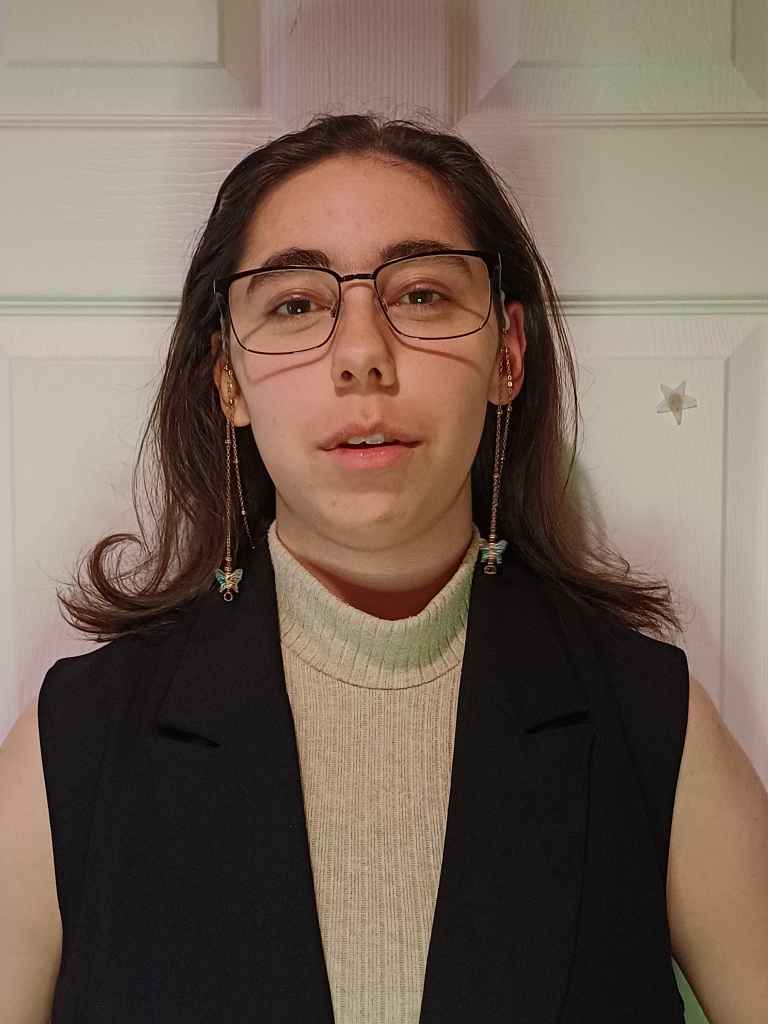
Malachi is a Creative Writing student at York St John University. Their writing centres the idea of change, both internal and external. When not writing, Malachi has a variety of other creative hobbies such as sewing, photography, and dance.
 Terra Two