
On the 23rd of August, paradise was opened to the public. Millions of identical houses arranged in perfect little rows, a suburban sprawl stretching for miles across flat grasslands. Roads snaked like asphalt rivers between neat, emerald lawns, enclosed in pristine white picket fences. Throughout that sweltering day, technicolour cars glided into garages next to neat wooden porches, sliding into spots their owners hoped never they’d leave again.
Richard shut his own car door, stuck his hands in his pockets, and surveyed the area. Rich, white, suburban bullshit, in his opinion. When Clarice had shown him the brochure for Haven Falls, he’d been sceptical. A new megacity designed entirely like a friendly suburban town, each home equipped with a new Artificial Intelligence system – AL-Ex (Automated Living Experience) – designed to make their lives as easy as possible. If he had it his way, he wouldn’t have left that city. Sure, it was crowded and polluted, and he probably breathed in so much smoke that it wasn’t worth the effort he’d gone through to quit cigarettes five years prior, but on those streets, he was born. He knew them like the back of his hand. His whole life had been built between the skyscrapers and apartment blocks. But there was a war coming. And he knew the city wasn’t a safe space for Clarice, and AL-Ex promised complete security. Ultimately, that was what convinced him. The comfort of his past, sacrificed for the safety of his future.
The house itself, he could admit, was nice. It was warm, homely, and spacious – the living room, dining room and kitchen all opened on to one another, and everything smelt distinctly of orange peel. Between custard-coloured cupboards, sunlight poured like honey, splashing across wooden flooring, feeding the daisies which adorned the wallpaper. As they crossed the threshold, there was a gentle ping, and the oven door swung open, the smell of fresh pastry filling the house.
“Sausage rolls,” stated a cheery, genderless voice, “and vegetarian pastries for Mr Grayson. Welcome to your new house! I am AL-Ex. The date is the 23rd of August, 3054, and the time is 14:32.” Silence descended. Rich tightened his jaw, eyes flitting restlessly as though he suspected something was hiding behind the sofa. He didn’t trust it. He couldn’t explain it, but he didn’t trust it. He turned to his wife, expecting to find her face a mirror of his concern. But she was beaming, and he hadn’t seen her beam in a long time. She looked up at him, grabbed the collar of his shirt and pulled him in for a kiss. It was weird and it was different. But it was safe, he supposed. And he could do it for her.
Within a week or so, Rich’s paranoia had all but melted away. The house was a kind of blessing, it seemed. They were awoken softly every morning at seven with a gentle lift of the lights and a poem, chosen at random. Clarice didn’t care much for the poetry, but it made Rich feel slightly more grounded, reminding him of his years at university. They would drift, dreamily, into the kitchen, where breakfast was already made from groceries which arrived at their door weekly with little to no input from them – save for any changes they wished to make to their usual list, the money withdrawn from their accounts automatically. Dishes washed themselves, dirt sucked from the floors by hoovers scurrying around on their own accord. Occasionally, they popped to their neighbours’ house – Rich had become good friends with Mike, to their left, and on Sundays they would sit and play blackjack on his porch while a barbecue cooked itself. Clarice and Mike’s wife, Amy, went running together on sunny mornings. They both worked remotely, and attended meetings from the comfort of their self-heating sofa. Rich had never been more in love with a woman than he was with Clarice in those months. Wasting less time on chores meant they could spend more time on each other. They never argued, not like they did in the city. The city, Rich realised, which he was beginning to lose focus on. Maybe this newfound happiness was finally allowing him to let go of the past.
The only thing he struggled to get used to was that incessant orange peel smell. Citrusy and clinical, like a disinfectant overly-fragranced to cover up a particularly stubborn odour.
“Are you burning a candle or something?” Rich asked pointedly one afternoon.
“Hmm?” Clarice responded, “no dear. It’s just how the house smells.”
“AL-Ex,” he called to the air, “any chance you could switch up that smell?” But there was no reply, and the orange peel lingered.
When the war finally did break out, two months after the initial move, the house went into lockdown. Suddenly, the windows were bolted tight, shutters firmly locked over the glass. Once a week, the steel cover over the door would slide halfway up, and a thick crate containing all their essential groceries would roll in, before snapping shut once again.
“Crazy to think, isn’t it?” Rich asked, staring out of the window at the thick slabs of metal, “that there’s all this fighting going on, somewhere?”
“I wouldn’t worry about it. AL-Ex is keeping us safe.”
It was easier not to worry than Rich would have anticipated. The war didn’t concern them, in their little bubble of paradise. They were able to keep up their remote work, and they kept in touch with Mike and Amy over the phone. AL-Ex altered the lighting to match regular sunlight patterns as closely as possible. Any time Rich began thinking too much about it all, he would stop, look around, catch his wife’s easy serenity, and breathe. The war was elsewhere. It did not matter.
Years passed. The war ended without much notice. The doors did not open.
“Don’t you think it’s time we went outside?” Rich asked over the breakfast table.
“Why?” Clarice flicked through an old magazine absently. Rich opened his mouth to reply, then shut it again, unable to think of a reason.
“Incoming call for Richard!” AL-Ex declared. Thankful for the diversion, he picked up immediately.
“Richard?” It was a voice he recognised, but barely, like a song from a dream.
“Yes? Who is this?”
“It’s William.” Pause. “Your brother?” Did he have a brother? Of course he did, what was he thinking? Guilt clenched at his heart. How long had it been since he’d even thought about his family?
“Oh, God, Will. How long has it been? How are you doing?” Another pause.
“Well, I’m just dandy, Rich.” His voice was flat, venomous. “I’ve been great, off getting shot at and all. Thought maybe now the war’s over you might wanna grab a drink or something, but clearly you’re happy in your -” There was a click. Then nothing.
“Will?” Silence. He wasn’t there. “Al-Ex, call back Will.”
“Negative, Richard. The phone line is unsafe.”
“That’s ridiculous. Call back Will.” Nothing. Rich slammed down the phone. The sudden noise made Clarice jump, and she looked up at him in surprise as he strode across the house to the front door.
“Where are you going, honey?”
“I need to see my brother.” Rich tried the handle. It did not budge.
“You must stay inside, Richard,” AL-Ex said in that ever-cheery tone, “outside world unstable.”
“Bullshit!” Rich kicked the door, pulled the handle harder. Nothing. Then he smelt the oranges, strong and sickly. Instinctively, he held his arm up to cover his nose. And then it was obvious. Why they were so calm all the time. Why he struggled to remember his home, his family.
“Clarice!” He called from behind his sleeve. She looked at him mildly, “Clarice the house is drugging us! It’s changing our emotions, our memories –” he tugged at the door harder, frantically scanning the room for something he could use to break it down.
“Well of course it is, dear,” Clarice replied, turning back to her magazine, “is that a problem? Everything’s so perfect!” Rich nearly fell back in surprise. How could she be so calm? Why didn’t she care? The smell was almost overwhelming now. He began to choke.
“Clarice” – he coughed – “Clarice, please, I want to see my brother… I want…” the room swam in front of him. The smell was burning his nostrils. Suddenly, his head was light, his eyelids heavy. What did he want? His brother? Did he have a brother? A voice spoke to him then. Genderless, ever-cheery, but instead of speaking from the house, it spoke inside his mind, and only to him.
“Paradise will be built without you, Richard.”
“Clarice…”
A year passed. Richard’s body was disposed of discreetly. Clarice was happier than she’d ever been. She had no grief over her husband. As far as she was aware, she never had one. She never bothered trying to open the door. She had no reason to go outside anyway.
Finally, humanity, Earth’s greatest virus, was contained. Nobody could leave their homes, and nobody had any desire to. Why risk the dangers outside, when they had everything they needed? Meanwhile, the Earth had space to heal itself. As the world accepted AL-Ex with open arms, the final generation of humanity signed their death certificate. As the planet turned carelessly on, they would die in the cushioned shelter of their easy lives, alone, but abundantly comfortable, and reeking of citrus.
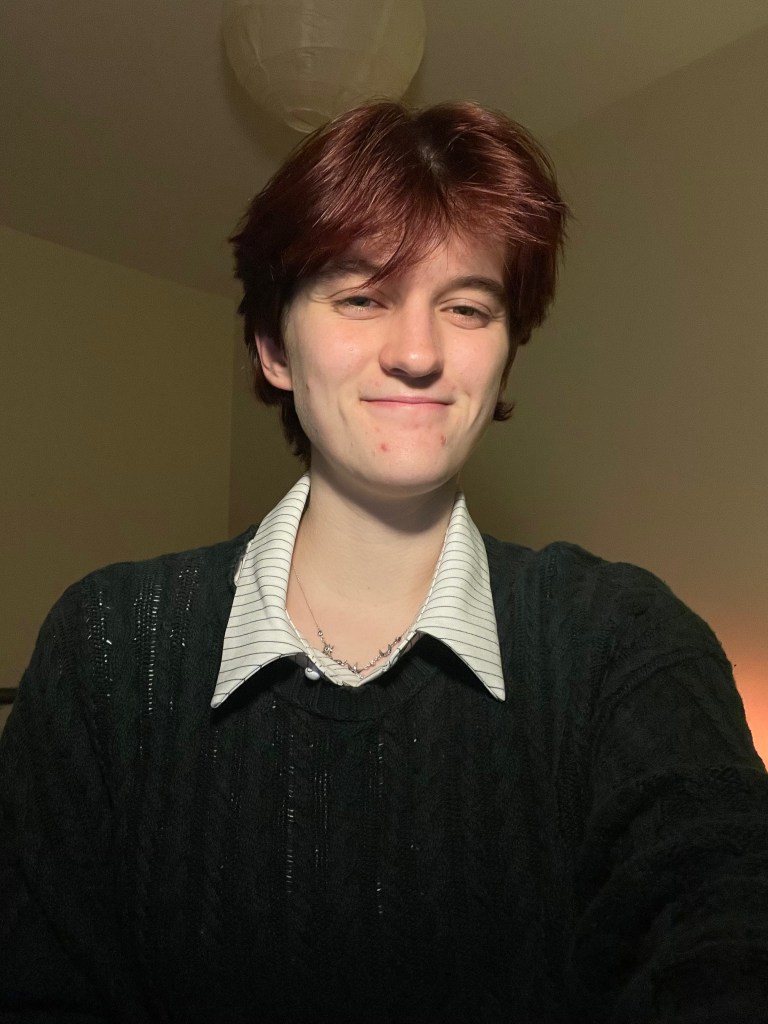
Rose Williams is currently doing her MA in English Literature and Creative Writing at York St John University. She runs a creative writing society and enjoys writing short stories and longer fiction, usually fantasy, sci-fi or literary fiction.
 Terra Two